
My Story
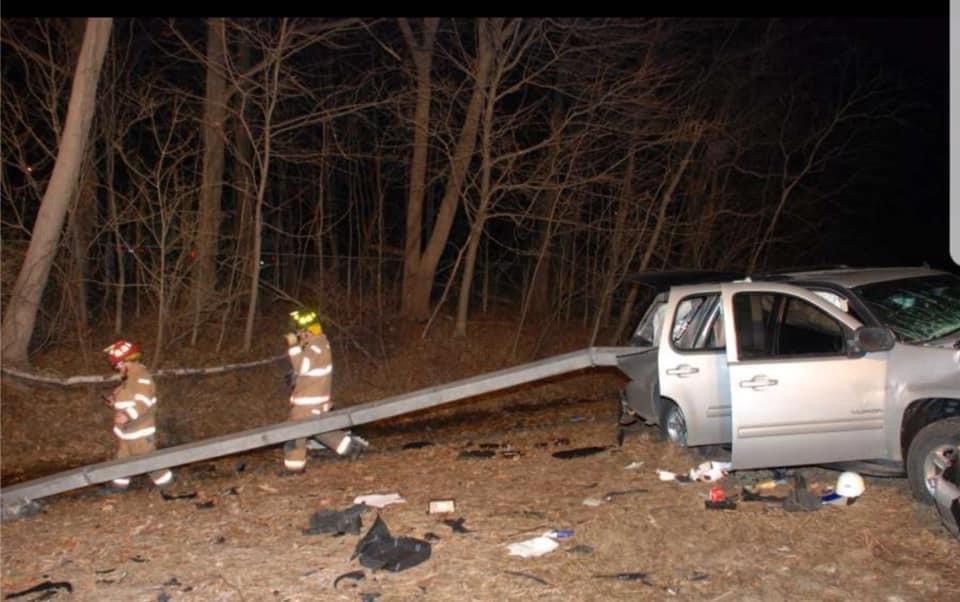
My Yukon took a 27-foot guardrail straight through it that night — and somehow I walked away. Well, I hopped away, but we'll get to that.
I grew up in Blackshear, a small town in southeast Georgia, with parents and siblings who loved me fiercely and a life that felt full in all the simple ways — church on Sundays, farming tobacco in the summers, and family always close by. My dad worked for CSX and my mom drove a school bus. I played sports all through high school, lettering four years in basketball and a couple more in football and baseball. After graduation I found my own path that eventually led me to CSX, where I've been the last 21 years.
In 2014, life looked different. I had moved over a thousand miles from home to upstate New York for work, going through a divorce, and feeling the distance from everyone I loved. I filled my free time the way a lot of people do when they're hurting — going out with colleagues, drink after drink, night after night.
On April 3, 2014, I made a decision that changed everything. After a night of drinking too much, I got behind the wheel. I didn't make it home. My vehicle crashed into a guardrail, and I lost my leg.
I woke up in the hospital to my parents' faces — devastated, exhausted, afraid. I didn't fully understand what had happened until that moment. But seeing their pain made something click in me: I was alive. That was enough to stand on. I put on a brave face for them, and somewhere in doing that, I found real strength.
When you're lying flat on your back with nowhere else to turn, the only direction left to look is up. My faith carried me through those hospital days in a way nothing else could have — Jesus and His promises are what kept the fear from winning. I spent about five weeks in the hospital, then moved to occupational therapy, where I attacked every exercise they gave me. I left rehab in just ten days — faster than my doctors expected, and I liked to remind them of that every chance I got. For a while, I thought I'd skipped the hard part.
Then, one ordinary afternoon, alone in the house, I caught my shadow on the wall and saw, for the first time, that my leg was really gone. The grief hit all at once. It took a few days to find my footing again — but I did.
Life went on. I kept working, kept golfing (my handicap took a hit worse than my leg did, HA), but I kept showing up. I drink far less now, and differently, than I did before. Somewhere along the way, people started finding me — friends of friends, strangers on social media — asking if I'd talk to someone they loved who was facing a similar loss and struggling with their new reality. For years, I said yes, again and again.
That path eventually led me to a fundraiser for a young girl in our community who had lost her leg to cancer and needed help getting a prosthetic. I met her that night, and I met a room full of people showing up for her. Driving home, I told my wife Kari: I want to do more than talk. I want to build something.
That's how the HowellYeah Foundation was born — named for a play on my last name, borrowed from the hashtag my wife created for our wedding, and it sounds a little like "hell yeah," which feels about right.
We're still in our early days, working toward a public launch on April 3, 2027 — my 13th anniversary as an amputee. Our mission is twofold: to help finance prosthetics for people who need them, and to build a lasting community of support for life after the prosthetic arrives.
If there's one thing I hope you take from my story, it's this: tragedy doesn't get the final word. Something good — something that outlasts the worst night of your life — can grow out of it, and it can go on helping people for a very long time.
Brad Howell
Founder, HowellYeah Foundation